Congenital Heart Disease Care in New Jersey at Hackensack Meridian Health
Congenital heart disease (CHD) refers to problems with the heart’s structure that are present from birth. While heart defects may be diagnosed in the womb or immediately after birth, some may not show up until later in life.
Some defects are simple and may not cause symptoms, while others are more complex and may require ongoing care or surgery. At Hackensack Meridian Health, our experts provide innovative treatments and lifelong management to help you live a full and healthy life.
What is Congenital Heart Disease?
Congenital heart disease can refer to a variety of structural problems in the heart that occur during development in the womb. These may include:
- Septal defects: Holes in the wall between chambers of the heart.
- Valve defects: When heart valves are missing, narrowed or not properly formed.
- Complex congenital conditions: Such as Tetralogy of Fallot, transposition of the great arteries or single ventricle defects.
What are the Symptoms of Congenital Heart Disease?
Symptoms depend on the type and severity of the condition, and they may appear at birth or later in life. Common signs include:
- Rapid breathing or shortness of breath
- Fatigue during exercise
- Cyanosis (bluish tint to lips or skin)
- Heart murmurs
- Swelling in the legs, ankles or abdomen
If your symptoms are sudden, severe or worsening, call 911 immediately.
How is Congenital Heart Disease Diagnosed?
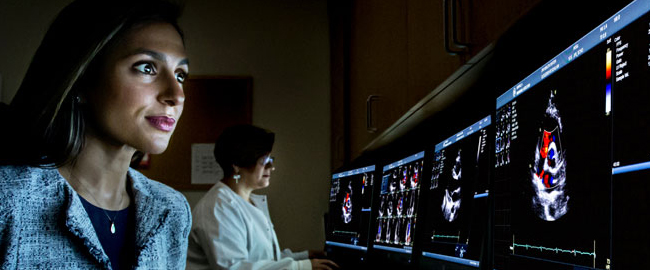
While many congenital heart diseases are diagnosed before or shortly after birth, some are not diagnosed until later in life. Our specialists use advanced imaging and testing to identify congenital heart conditions, including:
These tests are available at Hackensack Meridian Health locations across New Jersey. Use our Find a Location tool to locate a screening near you.
Treatments for Congenital Heart Disease
Treatment for congenital heart disease depends on the condition and its severity. Options may include:
- Medications to control symptoms or prevent complications.
- Catheter-based procedures to repair defects without open-heart surgery.
- Surgery to correct more complex heart defects.
- Lifelong care and monitoring. Many congenital heart conditions require ongoing follow-up throughout adulthood.
Frequently Asked Questions
Common symptoms can include:
- Irregular heartbeat (arrhythmia)
- Blue coloring of the skin, lips, or fingernails
- Feeling out of breath and exceptionally tired during or after physical exertion
- Fluid buildup in the lungs and shortness of breath
- Swelling in the neck, abdomen, lower legs, and feet
We treat a wide range of conditions, including:
- Aortic valve stenosis: A narrow aortic valve that doesn’t open and close properly.
- Mitral valve prolapse: Valve flaps bulge backward, causing blood to flow backward.
- Atrial septal defect: A hole in the wall between the heart's upper chambers.
- Ventricular septal defect: A hole in the wall between the heart's lower chambers.
- Patent foramen ovale: An opening between the upper chambers that failed to close after birth.
- Coarctation of the aorta: A narrowing of the aorta that affects blood flow.
- Mitral valve stenosis: A narrow mitral valve opening that restricts blood flow.